HW Blog

“A Two Decade Examination of Historical Race/Ethnicity Disparities in Academic Achievement by Poverty Status.” “Paschall, Katherine W. and
Gershoff, Elizabeth T.” Journal of Youth & Adolescence Complementary Index ; Jun2018, Vol. 47 Issue 6, p1164-1177 (2018)
This article is a breakdown of the apparent wage gaps found in America. These gaps are found many aspect of American economy. However it is particularly evident when comparing whites to minority. A study conducted over a twenty-year period, exposed the gaps between poor white students and their poor Black and Hispanic counterparts. It was found that this gap grew for black while the gap between non-poor Whites and Hispanics narrowed.

“The growth in achievement gaps by income or by poverty
status is often discussed in tandem with evidence for the
slow narrowing of Black-White and Hispanic-White gaps.
Collectively, the current discourse on educational inequality
suggests that racial/ethnic gaps are narrowing at a glacial
pace, while the income gap is widening at a moderate pace”


Blog 2

  • Three things learned from the Black Panther Documentary were…
    • The inter-workings of the Black Panther party
    • I learned about the methods of the Black Panthers IE their intimidation methods against the police
    • The rivalry they had with the federal government that played a part in their downfall
  • Brainstorming (African American struggle)
    • Achievement gap in education
    • Health care issues
    • Poor education
    • Unemployment
    • Unequal employment opportunities
    • Wage gaps
    • Homelessness
“A Two Decade Examination of Historical Race/Ethnicity Disparities in Academic Achievement by Poverty Status.” “Paschall, Katherine W. and
Gershoff, Elizabeth T.” Journal of Youth & Adolescence Complementary Index ; Jun2018, Vol. 47 Issue 6, p1164-1177 (2018)
This article is a breakdown of the apparent wage gaps found in America. These gaps are found many aspect of American economy. However it is particularly evident when comparing whites to minority. A study conducted over a twenty-year period, exposed the gaps between poor white students and their poor Black and Hispanic counterparts. It was found that this gap grew for black while the gap between non-poor Whites and Hispanics narrowed.

“The growth in achievement gaps by income or by poverty
status is often discussed in tandem with evidence for the
slow narrowing of Black-White and Hispanic-White gaps.
Collectively, the current discourse on educational inequality
suggests that racial/ethnic gaps are narrowing at a glacial
pace, while the income gap is widening at a moderate pace”

Intro Paragraph

America, the country heralded as a land of equal opportunity for all… assuming you aren’t born as a black male.

There is no crueler fate than to be promised equality only to be fed hate

In the year of 1619, the largest oppressive legal structure known as slavery took hold of America and African slaves were the unfortunate recipients. 400 years despite slavery being abolished African Americans find them in a new form of chains in modern America. The issue faced by the African American community is far more subtle in nature; it is disguised and hides under a veil of false promises and declarations. Institutional racism is what is now the true enemy of the African American community and the issue stems from the corruption and prejudice found within the American legal system, the workforce and education system.

Summaries

The article titled Does Customer Prejudice Help Drive the Employment Gap Between White and Black Americans?” published by the Harvard Review aims to identify the reason behind the employment gap between black and whites in America. Using the ONET and Labor Bureau researchers found that employment gap were found to be linked primarily to the location and white to black demographics. States where blacks were more prominent provided African Americans with stable employment but states primarily dominated by whites and known for racial discrimination historically had larger employment gaps. This was attributed not due to lack of black applicants due but white applicants being less likely to experience racial discrimination

The purpose of the journal Black and Male on Campus was auto ethnographic study was to explore the ways in which race and racism shape the college experiences of Black men. The study was conducted at a predominantly white institution (PWI) and was measured based on social interactions, achievement and e.t.c. The centrality of race and racism, the the challenge of dominant ideology, the centrality of experiential knowledge and a historical context and interdisciplinary perspective were all part of what is known as the CRT theory and is employed to measure the experience of a single undergrad student at Ohio State University.

Nearly 60% of middle aged African American men without a high school degree have served time in prison.The school-to-prison pipeline (STPP) refers to a path from the education system to the juvenile or adult criminal justice system. Over the past two decades, this path has grown significantly, and scholars attribute a myriad of contributing factors to this increase.  This article explains the correlates of the STPP and its disparate outcomes, most notably for students of color; those with disabilities; and lesbian, gay, bisexual, transgender, queer, and questioning students. The article concludes with implications for social workers in various settings and specific strategies for reducing the impact of the STPP.

Brainstorm on Marginalized Groups

Who to talk about?

Some groups I like to discuss are felons and African American felons. I feel both these groups are marginalized in that they are exclusive looked upon as a potential dangers to major groups.

What are they’re major concerns?

Unearned and earned notoriety are the two problems facing these communities. For felons they are defined and profiled for their past mistake whether petty or major. African Americans teens are defined by what others believe they will become and they are seen as delinquents and potential felons based on nothing but the color of their skin and where they come from.

3 Issues?

Profiling/ Stereotypes, Employment, and poverty are common issues found in African American youth communities. These groups typically face profiling in their communities, and this lead to difficulty with employment as employers are dissuaded to employ these groups of people based on their own fears and views of the group. This lack of consistent employment leads to a influx in poverty for these communities

You must persaude the reader

Pathos

Logos

Ethos

Identify three clear issues= 3 point thesis

5 Research Sources must be included

No first or 2nd person

3 Facts about the Vanguard

The Black Panthers did not screen potential members many members were swiftly inducted into the party without any regards for the person true intentions and background primarily due do the party rapid popularity in nationally.

The Black Panther brought forth the idea of urban black culture. Urban black culture promoted the idea of natural black beauty and aesthetic. Many of the members were teenagers and young adults.

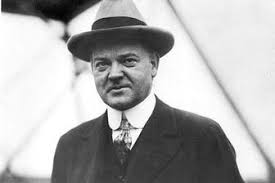
President Hoover was the one of the main defined adversaries to the Black Panther Party. Hoover started the the counter intelligence program in order to hamstring the efforts of the Black Panthers. He wanted to prevent what he saw as “black nationalist efforts”. This program was not made public and were intended to destroy credibility, instill doubt in the eyes of the public and subsequently destroy the Black Panthers.

The Top 5 Request of the Black Panthers

  1. We want full employment for our people

My group believed that the right to full employment was the most important request. The right to a job is critical in ones ability to be self sustaining. Jobs allow people t take care and provide for themselves, loved ones and communities.

  1. Protection from police brutality

A study conducted by mappingpolicebrutality.org found 9 the police killed 1,143 people in 2018. Black people were 23% of those killed despite being only 13% of the population in America. My group believed that this problem has been a constant form of systemic oppression towards African Americans the ability to halt would

  1. Rights to determine the destiny for our pressed black communities

  1. We want decent education for our black communities

Education gives a person the knowledge of the world around them and the ability to make changes to make that world something better. My group believes quality education is a must for the black community in modern day America. Proper education builds gateways for African Americans and with education one can seek higher education and subsequently more jobs and job opportunities

  1. We want the right to fair trail

According to the reports CRF-USA Organization statistical studies suggest that more than half of all black males in large cities can expect to be arrested at least once during their lifetime, compared to only 14 percent of white males that are arrested. African-Americans despite the fact that they make up only 12 percent of the U.S. population, are 45 percent of all prison inmates and 40 percent of those sentenced to death. On top of this jarring statistics there has been been a wide scale instances wrongful convictions among African Americans cases such as the Ed Johnson, The Trenton 6 and Lena Baker are such examples a strong reassessment of the current judicial system is in order to prevent such incidents.

What to Know about Me?

I am a college student athlete.

I am a aspiring information systems major.

I enjoy music and reviewing visual media.

I’ve worked alongside NFTE and won a regional championship

I plan to work in the cyber-security.

My First Blog Post

Be yourself; Everyone else is already taken.

— Oscar Wilde.

This is the first post on my new blog. I’m just getting this new blog going, so stay tuned for more. Subscribe below to get notified when I post new updates.

Introduce Yourself (Example Post)

This is an example post, originally published as part of Blogging University. Enroll in one of our ten programs, and start your blog right.

You’re going to publish a post today. Don’t worry about how your blog looks. Don’t worry if you haven’t given it a name yet, or you’re feeling overwhelmed. Just click the “New Post” button, and tell us why you’re here.

Why do this?

  • Because it gives new readers context. What are you about? Why should they read your blog?
  • Because it will help you focus you own ideas about your blog and what you’d like to do with it.

The post can be short or long, a personal intro to your life or a bloggy mission statement, a manifesto for the future or a simple outline of your the types of things you hope to publish.

To help you get started, here are a few questions:

  • Why are you blogging publicly, rather than keeping a personal journal?
  • What topics do you think you’ll write about?
  • Who would you love to connect with via your blog?
  • If you blog successfully throughout the next year, what would you hope to have accomplished?

You’re not locked into any of this; one of the wonderful things about blogs is how they constantly evolve as we learn, grow, and interact with one another — but it’s good to know where and why you started, and articulating your goals may just give you a few other post ideas.

Can’t think how to get started? Just write the first thing that pops into your head. Anne Lamott, author of a book on writing we love, says that you need to give yourself permission to write a “crappy first draft”. Anne makes a great point — just start writing, and worry about editing it later.

When you’re ready to publish, give your post three to five tags that describe your blog’s focus — writing, photography, fiction, parenting, food, cars, movies, sports, whatever. These tags will help others who care about your topics find you in the Reader. Make sure one of the tags is “zerotohero,” so other new bloggers can find you, too.

Blog at WordPress.com.

Up ↑

Design a site like this with WordPress.com
Get started